
AI CV Makers: How Automated Resume Builders Work And What To Expect

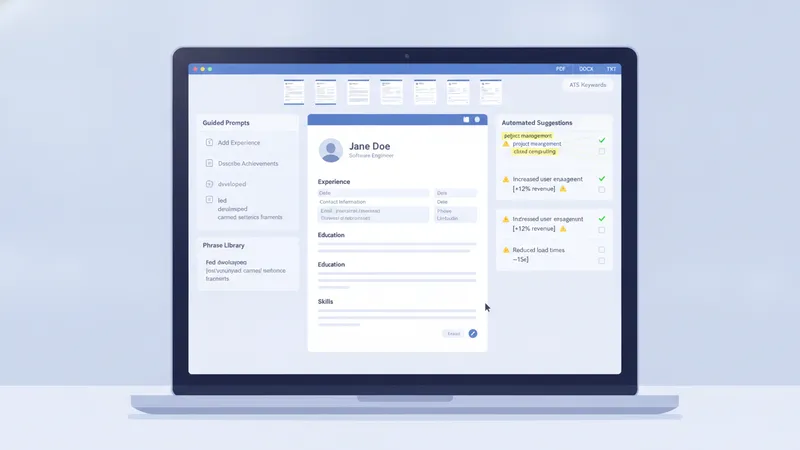
AI CV Makers: Features and functional components
Feature sets across résumé automation tools commonly include guided prompts, phrase libraries, and export controls. Guided prompts may walk users through role descriptions and responsibilities, while phrase libraries offer common sentence structures and action verbs that can be adapted. Export controls typically allow selection of PDF, DOCX, or plain text formats. Some systems integrate job-description analysis to surface relevant keywords. When assessing features, consider whether the tool supports structured contact and dates, customizable headings, and the ability to edit generated text directly rather than only through prefilled fields.
Automated phrasing and template selection are distinct but related components. Template selection determines layout and visual hierarchy, and may affect how applicant tracking systems parse a résumé. Automated phrasing uses pattern-based or model-based generation to suggest achievement statements; model-based suggestions may include inferred metrics but can also invent non-verified claims if user input is sparse. Because of this, many workflows combine automated suggestion with manual validation, enabling users to refine wording and ensure factual accuracy before export.
Job-description analysis components often rely on keyword extraction and frequency analysis. Systems may highlight nouns and verbs that recur in the description and recommend emphasizing matching skills and terms. This function typically aims to increase alignment between the résumé and an employer’s stated priorities, but reliance on surface-term matching can overlook contextual fit. A cautious approach is to treat highlighted terms as prompts to reflect relevant experience rather than direct inserts that risk over-optimization or unnatural phrasing.
Integration points such as LinkedIn imports, cloud storage, and ATS upload features can streamline workflow. LinkedIn import tools may prefill sections but often require normalization of role titles and dates to match résumé conventions. Cloud storage integrations allow version control and access across devices. Where direct ATS upload is offered, attention to file format and section sequencing is advisable, as different employer systems parse resumes with varying fidelity. These functional aspects often shape how users incorporate automated tools into a broader application process.