
AI-Powered Email Tools: How Automation Supports Lead Generation Workflows

AI-Powered Email Tools: Personalized workflows, scheduling, and automated follow-ups
Personalized workflows combine segmentation outputs with template logic to assemble email variations tailored to recipient context. Templates often include dynamic fields for known attributes and conditional blocks that adjust content based on segment membership. Automated follow-up logic may escalate frequency or change messaging when certain triggers occur, such as a download or a demo request. Scheduling algorithms typically consider recipient local time and historical engagement windows to choose send times that may increase visibility without presuming universal optimal times.
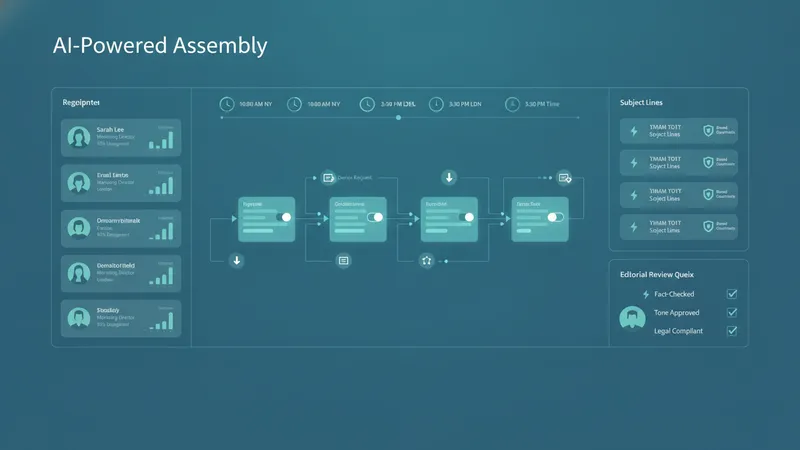
Generative text models are sometimes used to produce subject lines or short body variants; however, many teams implement guardrails so generated content remains factual and consistent with brand guidelines. Common guardrails include content templates with limited generative slots, editorial review queues for new templates, and checklist-based validation for claims that reference a contact’s status. These measures aim to reduce the chance of erroneous or misleading statements while still leveraging automation to scale personalization.
Automated follow-ups often use staged timing and conditional logic: a sequence may pause if a contact replies or convert, or it may advance to a different branch if a link is clicked. Back-off rules may suspend outreach for a period after a negative signal, such as a spam complaint or unsubscribe. Teams frequently instrument sequencing with monitoring metrics—reply rate, conversion rate, unsubscribe rate—to detect when a workflow requires tuning, and they may run controlled experiments to compare cadence variants.
From an operational perspective, maintaining clear ownership of templates, segment definitions, and scheduling rules is useful. Cross-functional handoffs between marketing operations, analytics, and legal or privacy teams may be needed to manage content approval and consent requirements. Documented workflows and change logs support accountable automation and help teams iterate while limiting unintended impacts on recipient experience.