
Artificial Intelligence In Breast Cancer Treatment: How AI Supports Diagnosis, Planning, And Care

Clinical workflows, patient monitoring, and research applications of AI in breast cancer
Beyond individual diagnostic or planning tasks, AI can support broader clinical workflows and longitudinal patient monitoring. Examples include automated triage queues that prioritize imaging or pathology cases for rapid review, natural language processing that extracts structured data from clinical notes, and remote monitoring systems that analyze patient-reported outcomes or device-derived signals. In research, these methods often accelerate cohort identification, feature extraction, and hypothesis generation for clinical studies.
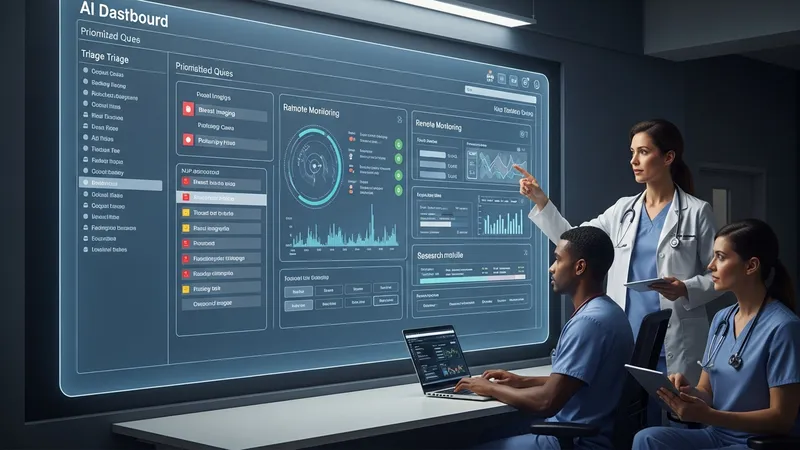
Implementation in routine care usually involves multidisciplinary coordination among clinicians, informaticians, and compliance teams. Workflow changes often aim to preserve clinician oversight while reducing repetitive manual work. Monitoring of system performance in live settings is commonly established, with mechanisms to flag discrepancies or unintended effects. These governance measures help ensure that algorithmic assistance aligns with clinical goals and institutional policies.
From a research perspective, curated datasets and open-source benchmarks have facilitated comparative evaluations of algorithms. Researchers often report that reproducibility and dataset diversity are critical for assessing generalizability. Collaborative initiatives may promote shared standards for performance reporting and interoperability, which can support more informed adoption decisions by clinical teams and contribute to evidence accumulation about real-world impacts.
Practical considerations for monitoring and maintenance include updating models as new data accumulate, documenting versions used in clinical decision-making, and training staff to interpret outputs. Institutions commonly establish review cycles to assess whether algorithm use alters diagnostic or treatment patterns in expected ways and to determine whether additional validation or refinement is needed to maintain safe and informative integration into patient care.