
Biomass Gasification Systems: How Thermochemical Conversion Produces Syngas For Energy

Syngas Composition, Quality Factors, and Cleaning Methods
Syngas composition typically includes hydrogen, carbon monoxide, carbon dioxide, methane, and trace light hydrocarbons; exact proportions depend on feedstock and operating parameters. Quality factors relevant to applications include calorific value, tar concentration, particulate load, and the presence of contaminants such as sulfur compounds, chlorine, and alkali metals. These species can influence engine performance, catalyst lifetime, and emissions. For power generation, lower tar and particulate levels are usually required, while synthesis routes for chemicals may demand tighter contaminant specifications, particularly with respect to sulfur and chlorine.
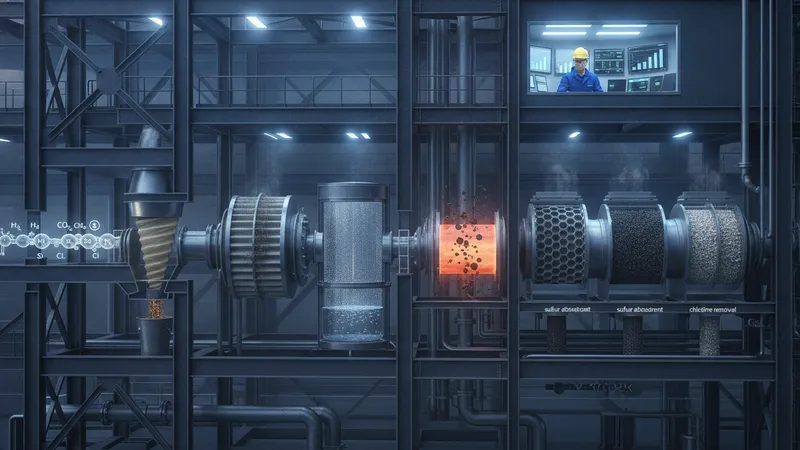
Gas cleaning methods span mechanical to chemical approaches. Cyclones and filters remove particulates, while scrubbers and wet cleaning may reduce soluble contaminants. Thermal cracking and catalytic reforming can lower tar concentrations, and adsorption or absorption systems target sulfur and chlorine species. Selection of cleaning methods often reflects an economic and technical balance: more stringent cleanup improves syngas usability but increases capital and operational costs. Many system designs include staged cleaning, with bulk removal upstream and finer polishing units downstream, to manage costs while meeting required gas quality.
Measurement and monitoring are integral to maintaining syngas quality. Periodic gas sampling for tar profiling, continuous monitoring of key gas species (H2, CO, CO2, CH4), and particulate counting may be implemented depending on risk tolerance. Trace contaminants may require laboratory analysis on a less frequent schedule. These data support decisions about when to regenerate filters, replace catalysts, or adjust operating conditions to prevent degradation of downstream equipment. Quality control protocols often form part of routine operations, especially where syngas supports sensitive processes.
Practical considerations for operators include designing cleanup systems that match the intended syngas end use and planning for maintenance of sorbents and catalysts. For small-scale systems, simpler filtration combined with thermal tar management may suffice for heating applications, whereas medium-to-large systems intended for gas engines or chemical synthesis generally require multi-stage cleaning trains. Establishing clear gas quality targets during design reduces retrofit risk and supports predictable operational costs associated with consumables and maintenance.