
BMC Remedy: Introduction To IT Service Management Capabilities

Knowledge Management, Reporting, and Operational Governance
Knowledge management organizes repair steps, known errors, and procedural documentation to support consistent resolution and user self-help. Reporting combines data across incidents, changes, assets, and requests to provide operational visibility for service owners and technical teams. Governance defines ownership, review cadences, access controls, and retention policies for both knowledge content and configuration data. Together, these elements support continual improvement by making outcomes and practices observable and auditable.
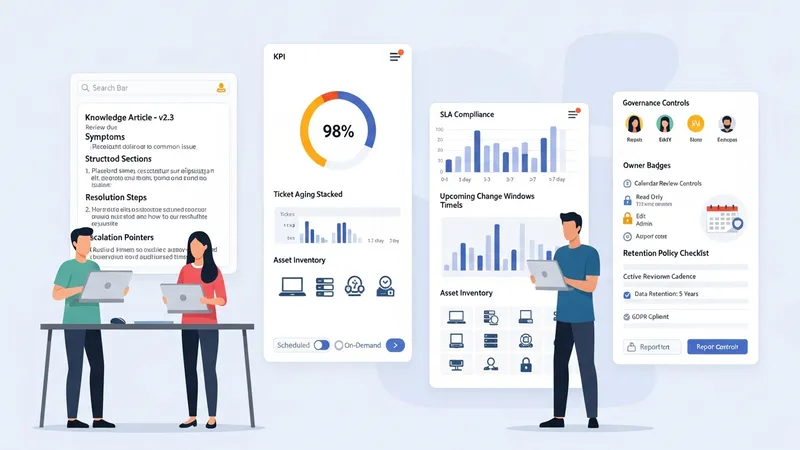
Knowledge articles are often versioned and assigned review dates to maintain relevance; searchability and article structure (symptoms, resolution steps, escalation pointers) can influence usefulness. Reporting typically surfaces SLA compliance, ticket aging, change windows, and asset inventories. Dashboards may be configured for different audiences—service managers, support leads, and executives—to present relevant KPIs without extraneous detail. Reports can be scheduled or generated on demand using the platform’s reporting tools or external analytics connectors.
Governance considerations include defining who may publish and approve knowledge, how articles are tested for accuracy, and how CMDB updates are authorized. Regular content audits and a feedback loop from agents can help keep knowledge current. Similarly, data governance for the CMDB may specify discovery frequency, reconciliation steps, and exception handling. These governance practices typically aim to sustain data quality and operational consistency rather than impose rigid controls that impede necessary changes.
Insider suggestions as considerations rather than directives include establishing a small core of knowledge stewards to curate high-value articles, scheduling quarterly CMDB reconciliation for critical services, and using a combination of automated and manual checks for reporting accuracy. Over time, measuring article reuse, ticket deflection, and report-driven decisions can indicate where governance or content processes may require adjustment. Continued observation of these signals can inform iterative improvements without prescriptive mandates.