
Frozen Food Logistics: Key Steps In Cold Chain Management And Distribution

Monitoring, data capture, and traceability
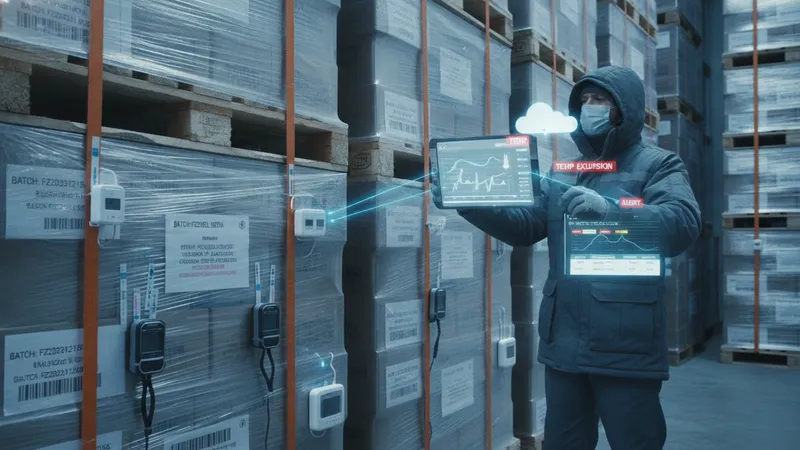
Temperature monitoring is central to documenting that frozen products have been maintained within required ranges. Systems range from single-use temperature indicators to continuous electronic data loggers and Internet-connected sensors. Recorded data often serve multiple purposes: internal quality checks, regulatory compliance, and evidence during incident investigation. Selection of monitoring technology commonly reflects needed sampling frequency, required accuracy, cost considerations, and the degree of automation desired for alerts and reporting.
Data management practices influence traceability and response capabilities. Time-stamped temperature records linked to shipment, batch, or pallet IDs can support root-cause analysis when deviations occur. Cloud-based platforms often enable centralized access to historical records and configurable reporting, while local data retention may be used where connectivity is limited. Interoperability with warehouse management systems and transport management systems can improve visibility across nodes and support coordinated decisions about product disposition.
Calibration and validation of monitoring devices are typical quality controls that help maintain confidence in recorded measurements. Periodic calibration against reference standards and documented maintenance procedures are common practices that may be expected by auditors. When monitoring identifies excursions, documented investigation steps and documented outcomes are often required to show that appropriate review and corrective action took place, and to preserve traceability across the supply chain.
Considerations for selecting monitoring solutions often include sensor placement, sampling intervals, and alarm thresholds. For example, placing sensors near product cores or representative load locations can yield more actionable data than ambient sensors alone. Sampling frequency may be increased during high-risk phases such as handoffs or extended transit. These choices are typically framed as operational trade-offs between data granularity, cost, and manageability.