
Google Explore Car Insurance: Introduction To Research Strategies For Understanding Costs And Coverage Needs

Comparing Sources, Synthesizing Information, and Ongoing Review
Effective research often combines multiple source types: primary policy texts, regulator materials, independent comparison tools, and historical rate or complaint data. Synthesizing these sources may involve cross-checking simplified policy summaries against the actual contract language and noting where summaries omit limits, exclusions, or endorsements. Periodic review is also relevant because rates, underwriting criteria, and market offerings may change over time; research that incorporates recent filings or updated regulatory guidance can reduce reliance on outdated assumptions.
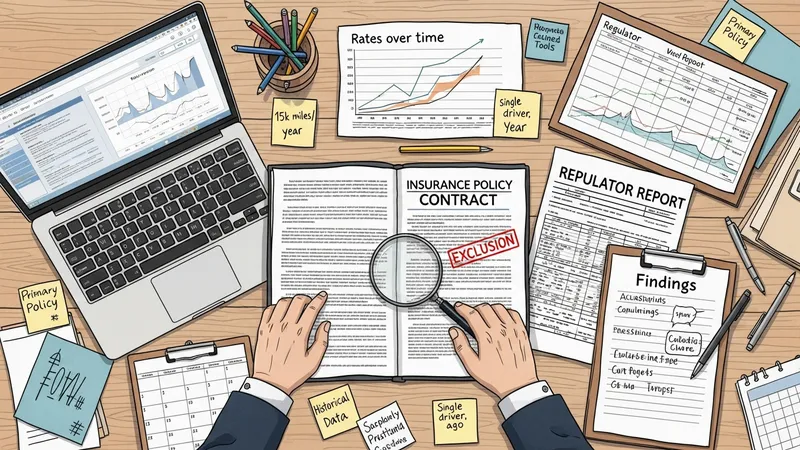
When assembling findings, clarity about assumptions used by each source is useful. For example, comparison tools may assume a specific mileage or driver profile that differs from an individual’s circumstances; regulators’ average premium figures may be influenced by demographic distributions not representative of a single user. Explicitly documenting such assumptions can help interpret why estimates diverge and which pieces of information require more precise, individualized verification.
Insider considerations that may be useful as neutral research points include checking the effective dates on policy forms, understanding whether quoted coverage includes temporary or limited endorsements, and noting how premium estimates handle surcharges or fees. For ongoing monitoring, research strategies may include maintaining a record of historical quotes and policy changes to observe trends rather than relying on a single snapshot.
Finally, research frameworks that combine qualitative and quantitative elements may yield more complete insights. Quantitative elements include typical premium ranges, deductible break-even calculations, and limits comparisons; qualitative elements involve policy language nuance, claims handling descriptions, and consumer experience summaries. Keeping both dimensions in view may help produce balanced, informational findings that assist understanding without prescribing a single course of action.