
Hot Water Heater Repair: Understanding Causes Of Leaks And Inconsistent Temperature

Temperature variability: heating elements, thermostatic controls, and sediment impacts
Variability in delivered hot water temperature can trace to heating elements, thermostats, or sediment that affects heat transfer. In electric units, two elements may operate sequentially; a failed upper or lower element can reduce capacity and create runs of lukewarm water. Thermostats may drift, causing incorrect cycling. In gas units, burner issues, faulty thermocouples, or restricted flues can reduce heat input. Sediment layers act as insulation around heating elements or the tank floor, requiring longer heat-up periods and producing inconsistent temperatures at taps served by different branches of the system.
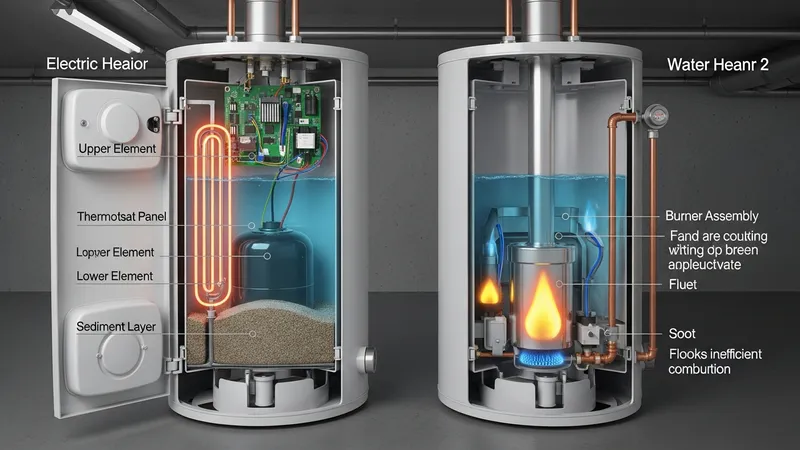
Diagnostic methods typically include measuring temperature at the tank outlet and at affected fixtures, testing element continuity with a multimeter, and observing control response. For electric systems, isolating and activating individual elements can reveal whether one element is failing. In gas systems, observing burner flame shape, color, and stability while measuring exhaust temperatures can indicate combustion or heat-exchange problems. These steps often clarify whether the issue lies with the heat source, the controls, or a downstream distribution problem before parts replacement is considered.
Dip tube integrity also factors into perceived temperature stability. A degraded dip tube that mixes incoming cold water too close to the outlet can reduce delivered hot temperature even when the tank is producing adequate hot water. This condition may produce cold returns at top taps while lower taps still receive hotter supply during low-demand periods. Inspecting or testing dip tube function by tracing cold-water inlet routing and monitoring temperature stratification in the tank can indicate whether replacement of the dip tube or flow-pattern adjustments are likely to help.
Frequency of temperature issues often correlates with water quality and usage patterns. In areas with harder water, mineral buildup can accumulate more rapidly, leading to more frequent heating-element failures and the need for periodic flushing. Systems serving multi-bath households may experience more pronounced temperature dips during simultaneous draws. Understanding typical operating patterns and local water characteristics helps frame the likely causes and informs whether maintenance, component repair, or system adjustments should be prioritized as next steps.