
Industrial Pallet Racking: Key Types, Configurations, And Applications

System types and structural characteristics related to pallet racking
Different racking types exhibit distinct structural characteristics that influence installation and maintenance. Selective racking typically features standard uprights and beams, allowing relatively straightforward reconfiguration of beam heights. Drive-in and drive-through systems require heavier, continuous rails and may include additional bracing to resist concentrated forklift impacts. Pallet flow systems incorporate rollers and gates that demand precise inclination and head-control devices. Mobile bases add mechanical or electric drive elements beneath bay carriages, which alters anchoring and loading considerations. Understanding these structural differences can aid planners in anticipating required floor reinforcement, anchoring methods, and long-term maintenance.
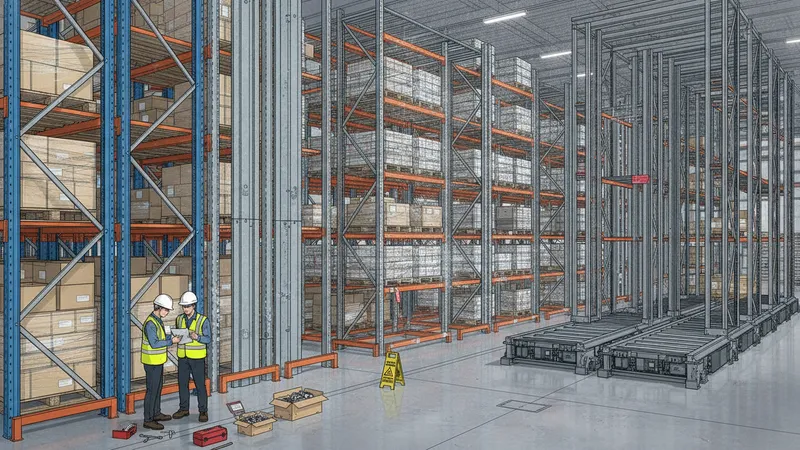
Material and finish choices can also vary by environment and system type. Standard painted or powder-coated steel is common for ambient warehouses, while galvanised components may be chosen for corrosive or refrigerated environments. Components that support dynamic movement — such as rollers, carts, or sliding mechanisms — often require additional inspection intervals. Engineers and facility managers often document lifecycle expectations for each material and consider spare-part availability when assessing total cost of ownership, noting that system complexity may affect repair times and downtime.
Installation sequencing may differ among types and often influences operational disruption. Selective racking can often be installed incrementally, enabling partial operation during build-out. Conversely, high-density systems that rely on continuous lanes or gravity flow may need larger contiguous areas to be completed before active use. Mobile racking installation typically involves precise leveling and testing of carriage movement before loading. Project planning frequently allocates time for calibration, safety gate installation, and operator familiarisation to reduce early operational errors.
Inspection and load-testing regimes relate to structural type. Systems with frequent forklift entry into rack lanes, such as drive-in, may experience more direct impacts and thus can require more frequent visual inspections and more robust collision-protection options. Gravity-flow and push-back systems include moving parts that may need lubrication, wear checks, and replacement components. Establishing an inspection schedule that matches the mechanical complexity and traffic intensity of the chosen system often helps maintain performance and safety over time.