
Legal Workflow Automation: Streamlining Document Management And Review Processes

Search, notifications, and workflow tracking for legal document processes
Effective search and notification mechanisms are central to managing document workflows. Search may combine full-text indexing with structured metadata queries to return relevant documents quickly. Configurable notification channels—such as email alerts, in-application messages, or integrations with collaboration platforms—inform reviewers about assignments, deadlines, and status changes. Teams often tune notification frequency and format to avoid alert fatigue while preserving timely awareness of pending actions and escalations.
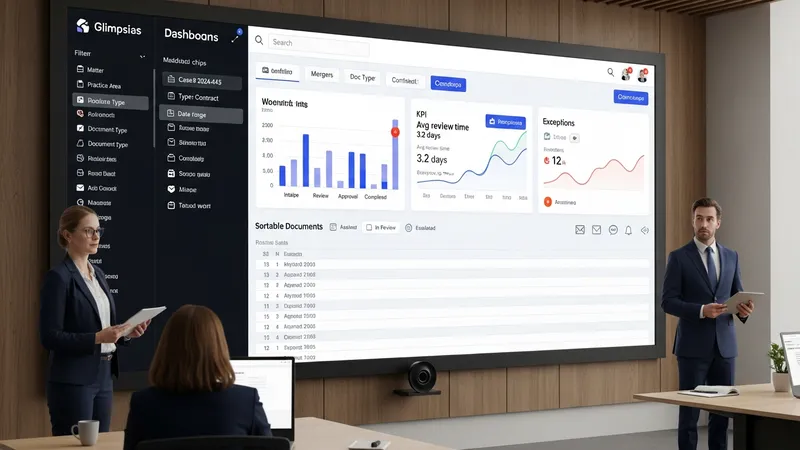
Tracking functionality frequently includes dashboards and reports that display key performance indicators such as average review time, number of documents in each stage, and counts of exceptions. These dashboards may support filters by matter, practice area, or document type so managers can investigate workflow bottlenecks. Tracking data is often used for continuous improvement: identifying recurring delays, adjusting workload distribution, or refining routing rules. Metrics are typically interpreted cautiously, recognizing that complex matters may naturally take longer to resolve.
Indexing and search quality depend on consistent metadata and normalization practices. Establishing canonical values for fields such as document type, jurisdiction, or client name supports reliable query results. Controlled vocabularies and dropdown selections in intake forms help maintain data quality. Where legacy repositories lack consistent metadata, projects may include a remediation phase to tag or reclassify prior documents so that search and analytics produce more accurate results across the corpus.
Notifications and tracking systems should include audit-friendly records for compliance and dispute resolution. Recording when notifications were sent, who opened documents, and timestamps for progress helps reconstruct timelines. In some contexts, retention of such interaction logs may be subject to legal hold or privacy rules, so governance policies often define what logs are preserved and for how long. Teams commonly review these policies with legal and compliance stakeholders before enabling comprehensive tracking features.