
NCCN Non-Small Cell Lung Cancer: Overview Of Guideline-Based Care Pathways

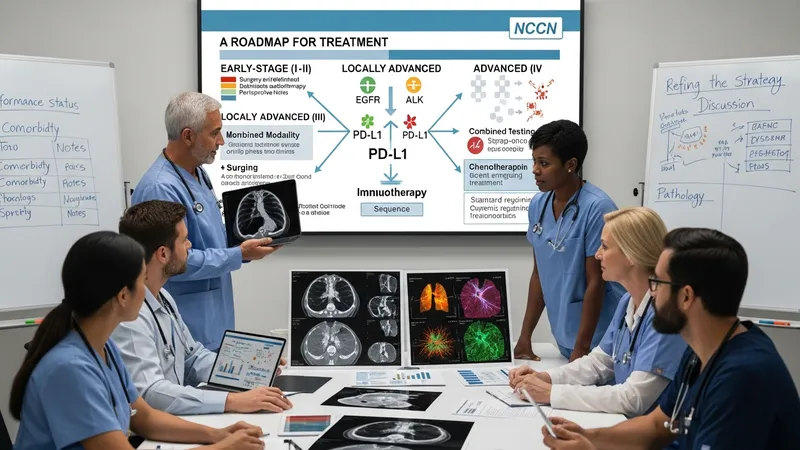
Treatment planning and modality selection in NCCN guideline-based pathways
Treatment planning sections of guideline-based NSCLC pathways generally describe frameworks for selecting local and systemic therapies based on stage, performance status, and tumor characteristics. For early-stage disease, pathways often outline criteria for considering surgical resection versus definitive radiotherapy and provide notes on perioperative considerations. For locally advanced presentations, the pathways typically detail combined modality approaches and sequencing options. For advanced disease, systemic therapy selection is commonly discussed in relation to molecular and immunologic test results, with attention to patient-specific factors and prior treatments.
Within these pathways, multidisciplinary tumor board review is often presented as an organizational component that may improve alignment of care choices across specialties. Pathways frequently describe roles for thoracic surgeons, radiation oncologists, medical oncologists, pulmonologists, radiologists, and pathologists in evaluating complex cases. The frameworks usually indicate that recommendations may vary according to patient comorbidities, functional status, and preferences, and that individualized choices are expected within the pathway structure rather than a single uniform plan.
Sequencing and integration of modalities are discussed with attention to practical constraints such as treatment tolerability and timing of systemic therapies relative to local treatments. The pathways may outline common sequences—for example, neoadjuvant systemic therapy followed by surgery in selected cases or concurrent chemoradiation for certain unresectable tumors—while noting that evidence strength and practice patterns can evolve. These sections emphasize that pathway guidance is intended to support clinical judgment and multidisciplinary coordination.
Operational details in pathway documents often include recommendations for pre-treatment assessments, such as pulmonary function testing and cardiopulmonary evaluation for surgical candidates, and for supportive care needs during systemic therapy. The pathways typically recommend monitoring parameters and considerations for dose adjustments based on toxicity, framing these as examples of routine clinical management rather than definitive rules. Such guidance is presented to aid consistent planning across care teams.