
Profit And Loss Software: How Small Businesses Can Track Income And Expenses

Budgeting, cash flow visibility, and monitoring performance
Profit-and-loss reporting is frequently used alongside budgeting and cash-flow visibility features to monitor short-term financial health. Budget modules allow entities to set expected revenue and expense amounts for future periods and compare actuals to plan. Variance reporting can show which categories deviate from expectations and by how much, which may aid internal planning and operational adjustments. Cash-flow views that project inflows and outflows based on open invoices, scheduled bills, and typical timing patterns can help users anticipate liquidity constraints and prioritize transactions.
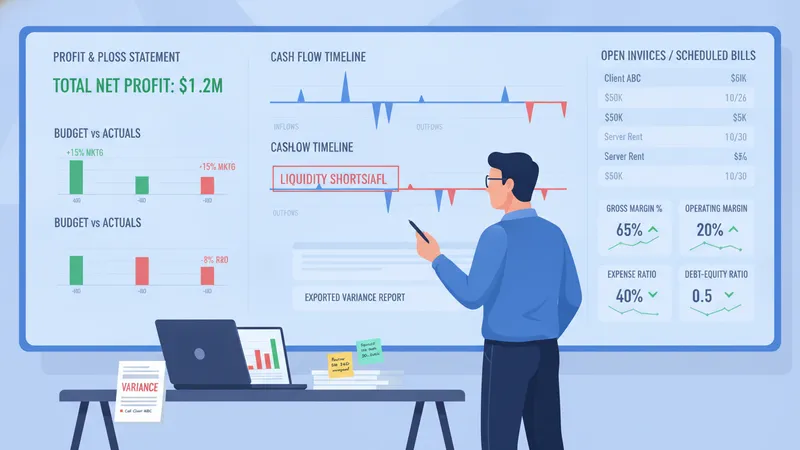
Key performance indicators linked to profit-and-loss items—gross margin percentage, operating margin, or expense ratios by category—may be available within software dashboards or through exported reports. Monitoring these KPIs over rolling periods can highlight structural shifts in expense composition or revenue mix. When setting KPIs, users often choose measures that reflect their business model, such as gross margin for product sellers or utilization rates for service providers, and track trends rather than isolated values.
Forecasting features that use historical profit-and-loss data to project future results typically rely on assumptions about sales pace, seasonal patterns, and recurring expenses. Forecasts may be presented at monthly, quarterly, or annual intervals and can be scenario-based to reflect optimistic or conservative assumptions. While forecasts may aid planning, their accuracy depends on the quality of underlying data and the reasonableness of assumptions; periodic revision is a common practice to keep projections aligned with actual performance.
Routine performance monitoring benefits from combining summary statements with transaction-level access so users can drill into specific variances. For example, a rising marketing expense line item may be reviewed by filtering transactions tagged by campaign or vendor. Maintaining tags, project codes, or customer identifiers within transactions can support this level of analysis and make profit-and-loss insights more actionable for operational decision processes.