
Rubber Mixer Machine: Overview Of Types, Components, And Applications

Industrial applications, production workflows, and maintenance considerations
Rubber compounding equipment is widely used across sectors such as automotive sealing and tire components, industrial belting and hoses, footwear midsoles and outsoles, and molded technical parts. Different applications demand varied compound properties—e.g., high abrasion resistance for tires versus low compression set for gaskets—which often translates to distinct filler loadings, curatives, and mixing histories. Production lines integrate mixers with downstream shaping equipment, quality checkpoints, and storage systems to maintain continuity and traceability of material batches.
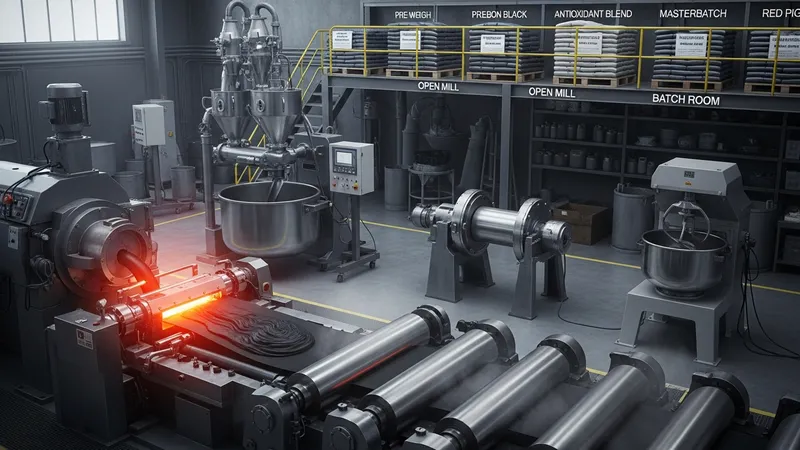
Typical production workflows include raw material receiving and pre-weighing, staged feeding into the mixer, discharge to intermediate storage or immediate shaping, and post-mixing quality checks. In high-volume operations, continuous mixing and inline extrusion or calendering can reduce handling steps and improve cycle-to-cycle consistency. For smaller or specialized runs, batch mixers and open mills may provide necessary flexibility. Inventory control and recipe documentation are commonly used to support reproducible outputs across shifts and suppliers.
Maintenance practices often focus on predictable wear items and contamination control: periodic inspection and replacement of rotor edges, roll covers, seals, and hydraulic fluids; checks for cooling channel blockages; and verification of sensor calibration. Planned downtime windows for preventive maintenance can reduce unplanned failures, and condition monitoring—tracking variables like bearing temperature or drive vibration—may support longer-term reliability. Safety routines, including lockout-tagout and guarding checks, typically form part of standard operating procedures.
Regulatory and environmental considerations include control of particulate emissions during handling of fillers, management of wastewater from cleaning and cooling systems, and documentation for substances of concern where applicable. When scaling operations or changing formulations, conducting material compatibility and process risk reviews can inform equipment adjustments and protect product quality. For readers continuing to other resources, later materials often address specific machine models, laboratory methods, and plant layout considerations in greater depth.