
Tech Tools For Business: Understanding Digital Solutions For Modern Operations

Integration and Interoperability Considerations for Digital Solutions
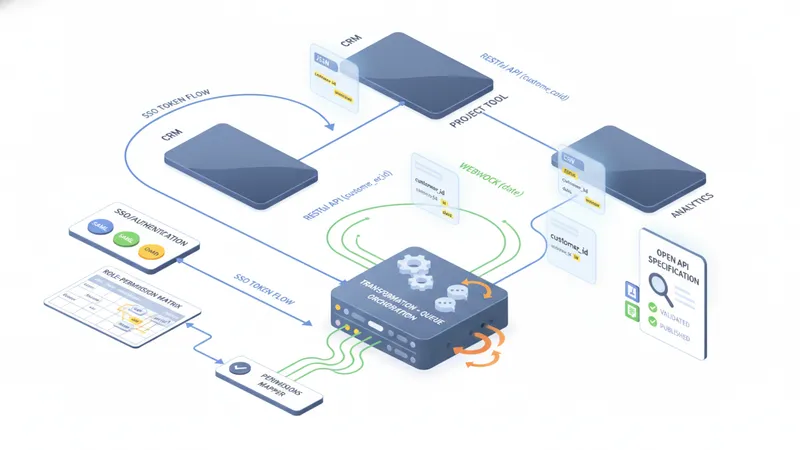
APIs and data formats commonly determine how easily tools interoperate. RESTful APIs, webhooks, and standardized data formats (JSON, CSV) are frequent methods for exchanging information. When integrating, mapping fields between systems is often required to maintain semantic consistency—customer identifiers, status codes, and date formats are typical alignment points. Middleware platforms that provide transformation, queuing, and orchestration capabilities may be used to decouple systems and manage retries. Organizations often assess integration maintenance costs and prefer solutions that expose clear, documented interfaces.
Authentication and identity integration often affect interoperability and user experience. Single sign-on (SSO) implementations using protocols such as SAML or OAuth may streamline access across multiple tools and reduce password-related overhead. Role and permission mapping across connected systems is a common complexity: a user’s role in a project tool may not directly correspond to a CRM permission set. Planning for consistent identity and access management can reduce administration time and help enforce consistent security controls across the environment.
Latency, data freshness, and synchronization frequency are practical trade-offs when designing integrations. Real-time updates via webhooks may support immediate notifications and near-instant status changes, while scheduled batching can reduce API call volumes and complexity. The choice often depends on how critical immediate consistency is for a given workflow. In many cases, teams adopt a hybrid approach that uses event-driven updates for high-priority flows and periodic syncs for bulk reconciliation tasks.
Vendor compatibility and versioning policies are relevant long-term considerations. Tools that change APIs or deprecate connectors may require ongoing adaptation. Using industry-standard integration approaches and documenting integration points helps mitigate future migration effort. It is common for organizations to maintain a concise integration inventory that lists data flows, owners, and update frequencies to manage technical debt and support operational continuity.