
Wastewater Recycling: Key Processes And Treatment Stages Explained

Wastewater Recycling: Biological Treatment and Secondary Clarification
Biological treatment is commonly the core component for reducing dissolved organic matter and, where required, removing nitrogen and phosphorus. Suspended-growth systems such as conventional activated sludge rely on a mixed liquor of microorganisms that metabolize organics; control parameters such as sludge age (solids retention time) and dissolved oxygen are routinely adjusted to balance treatment and energy consumption. Attached-growth systems use surfaces for biofilm development and may be preferred where lower operational complexity or resilience to shock loads is important. Hybrid systems combine features of both approaches.
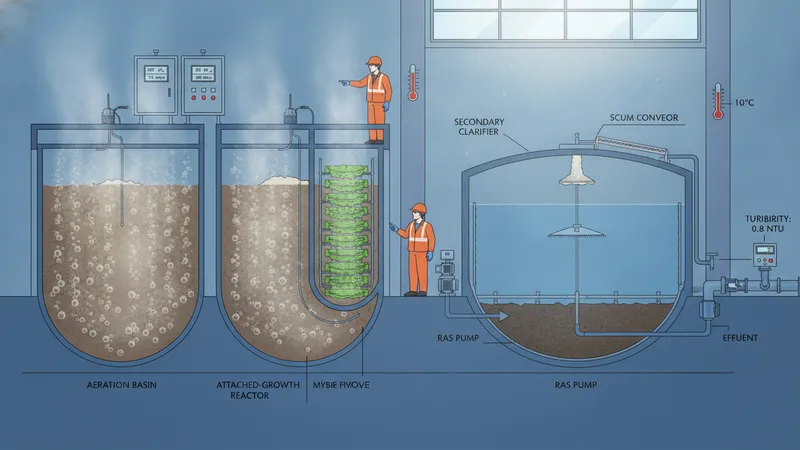
Secondary clarification follows biological reactors to separate treated water from biomass. Clarifier performance is influenced by sludge settling characteristics and return-activated sludge strategies. Poor settling can cause carryover of solids and impact tertiary treatment. Operators often monitor mixed liquor suspended solids and effluent turbidity as indicators of process health. Clarifiers may include mechanisms for scum removal and solids scraping; design should account for potential seasonal shifts in settling behaviour due to temperature or influent composition changes.
Nutrient removal within biological stages typically relies on sequencing aerobic and anoxic zones or on specialized processes such as anammox for nitrogen. Phosphorus removal can be biological (enhanced biological phosphorus removal) or chemical via coagulant addition. Each approach may affect sludge characteristics and downstream dewatering needs. During design, planners often assess trade-offs between chemical dosing rates, reactor volumes and energy demands to meet targeted nutrient limits under expected climatic and loading ranges.
Operational considerations often highlight the need for robust instrumentation and adaptive control. Monitoring of dissolved oxygen, pH, oxidation-reduction potential and ammonia concentrations can enable process optimization and early detection of upset conditions. For plants aiming at water reuse, secondary effluent quality sets the baseline for tertiary requirements and monitoring plans may be more stringent to ensure consistent performance. Staff training in biological process control can reduce the frequency of excursions and support long-term reliability.