
Auto Insurance: Introduction To Comparing Features Across Multiple Policy Options

Pricing factors, comparison frameworks, and practical considerations
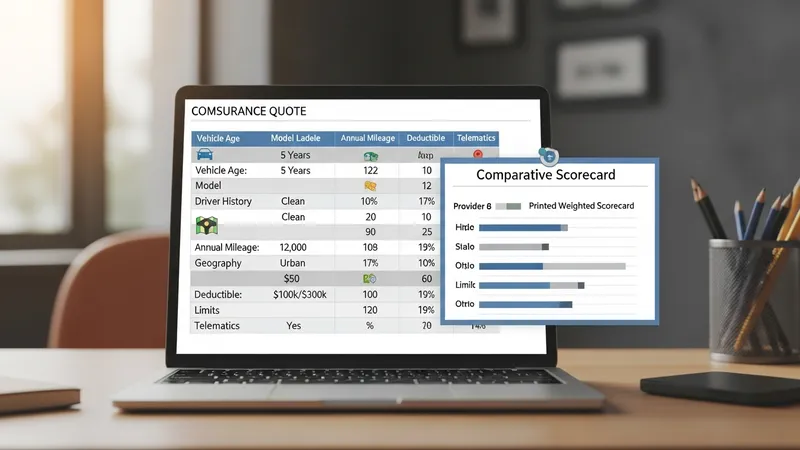
Premiums reflect a combination of underwriting variables and policy choices, so accurate comparison requires isolating those elements. Factors commonly affecting price include vehicle age and model, driver history, annual mileage, geographic risk exposures, chosen deductibles, and selected limits. Insurer-specific rating factors such as credit-based insurance scores, telematics-based discounts, or claims history application may vary and thus change comparative premium estimates. Recording these inputs consistently when soliciting quotes helps to ensure differences in price stem from policy design rather than inconsistent data.
Comparison frameworks may include weighted scorecards, total cost of ownership calculations, or scenario-based assessments that estimate out-of-pocket costs under typical loss events. A scorecard can assign neutral weights to components like coverage breadth, deductible flexibility, endorsements available, administrative terms, and estimated premium. Scenario assessments — for example, estimating costs for a common collision or theft event — can illustrate how different policies respond financially. These methods are analytical tools rather than recommendations and can be tailored to individual priorities.
Practical considerations during comparison include insurer financial strength indicators, complaint indexes published by regulators, and available customer service channels. Publicly reported financial ratings and regulatory complaint summaries may provide context about insurer stability and responsiveness, though they do not guarantee future performance. Access to claims support resources, digital claim filing options, and estimated repair times are operational differences that may influence which features are more relevant to an individual’s circumstances.
When consolidating comparison findings, document assumptions, margin of error in quoted premiums, and any policy conditions that could materially affect coverage. Keeping a written comparison record helps clarify why one policy’s features may be preferable in certain scenarios without asserting a universal recommendation. The following sections (if any) would typically apply these frameworks to sample scenarios to illustrate practical differences, continuing the informational analysis without prescriptive guidance.