
Lead Management System: How It Organizes And Tracks Prospective Customers

Reporting, data governance, and operational considerations for tracking prospective customers
Reporting commonly includes metrics such as lead source breakdown, conversion rates between stages, average time to conversion, and activity volume per team member. Dashboards that combine pipeline health metrics with activity indicators can help stakeholders understand whether low conversions are due to insufficient outreach or poor lead quality. When interpreting reports, it is important to consider how data entry practices and automated capture affect metric accuracy and completeness.
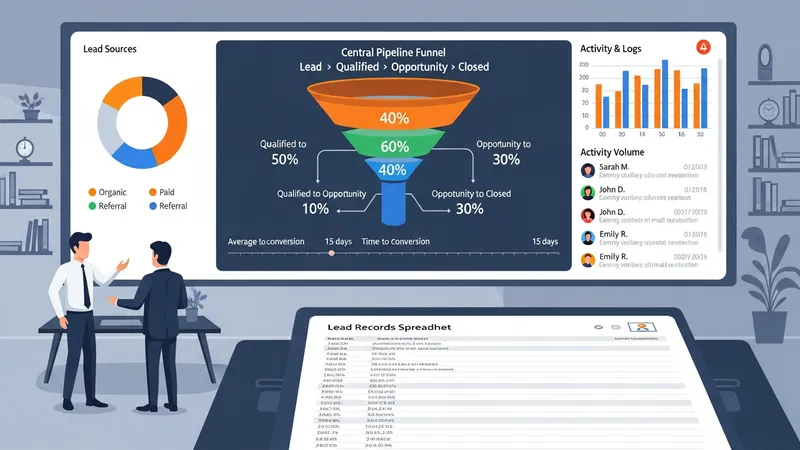
Data governance practices for lead records often cover field definitions, mandatory metadata, retention policies, and access controls. Clear definitions for fields such as “lead source,” “status,” and “owner” reduce ambiguity and improve the reliability of aggregated reports. Retention and archival policies help manage storage costs and privacy obligations by limiting how long personally identifiable information is retained when it is no longer needed.
Privacy and compliance considerations commonly influence system configuration and process design. Consent capture, opt-out handling, and secure storage of personal data are typical focus areas that teams address in collaboration with legal or privacy specialists. Integrations that transmit contact data to external services should be reviewed for data transfer controls and contractual safeguards to align with applicable privacy expectations.
Operational readiness involves training, documentation, and iterative process reviews. Training helps users understand how to log interactions consistently and how to apply qualification criteria. Documentation of common workflows, examples of correctly completed records, and a lightweight change-control process for field additions can reduce errors and preserve reporting integrity. Periodic reviews of system use and metrics may reveal refinement opportunities while keeping processes aligned with evolving business needs.