
Senior Camper Van Living: Daily Life, Routines, And Practical Considerations

Cooking, Food Storage, Hygiene and Bathroom Options for Senior Camper Van Living
Cooking and food storage systems affect daily meal routines and safety. Compact refrigerators or 12V systems may keep perishables while minimizing power draw; insulated coolers can be an interim option for short trips. Cooking surfaces such as induction hobs reduce open-flame exposure and can be used on stable counters, while propane cooktops require ventilation and secure storage for fuel. Storing frequently used items at mid-level or in pull-out drawers can minimize reaching. Planning meals around simple preparation and using pre-portioned ingredients may reduce time spent standing and moving.
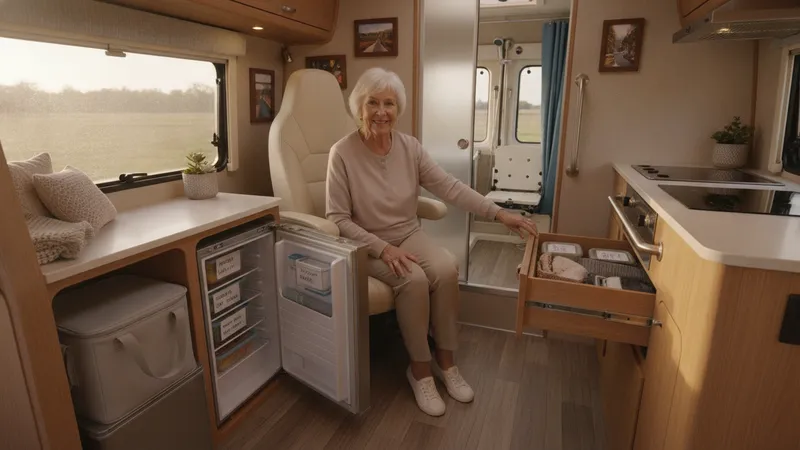
Hygiene and bathroom options vary widely and usually reflect space, water availability, and the occupant’s mobility. Wet baths provide enclosed privacy and warm water but typically demand more water and larger tanks; cassette toilets and composting toilets require regular emptying or maintenance but can conserve water and space. Portable shower setups can be used outdoors when privacy and weather permit, and low-step shower pans with seating or shower chairs may support those with limited balance. Waste disposal logistics should be planned based on frequency of travel and local regulations.
Water management is central to hygiene routines. Freshwater storage capacity, pump accessibility, and filtration options influence how often tanks need refilling and the feasibility of using onboard showers. Greywater handling varies by system; some setups collect greywater for later disposal while others are designed for short-term holding. Practical routines often include limiting shower duration, using low-flow fixtures, and scheduling tank emptying at designated service points or campsites that permit disposal.
Food safety and medication storage are additional considerations. Medications that require stable temperatures may need insulated containers or small medical coolers for certain doses, and dry goods kept in sealed, labeled containers can reduce spoilage and pest risk. Cleaning supplies and hygiene products are commonly stored in easily accessible locations to encourage regular use. Planning for contingencies—such as alternative food options or temporary reliance on external facilities—can be part of a cautious, routine-focused approach to daily living.